
The New Zealand Open – 54 years of special memories
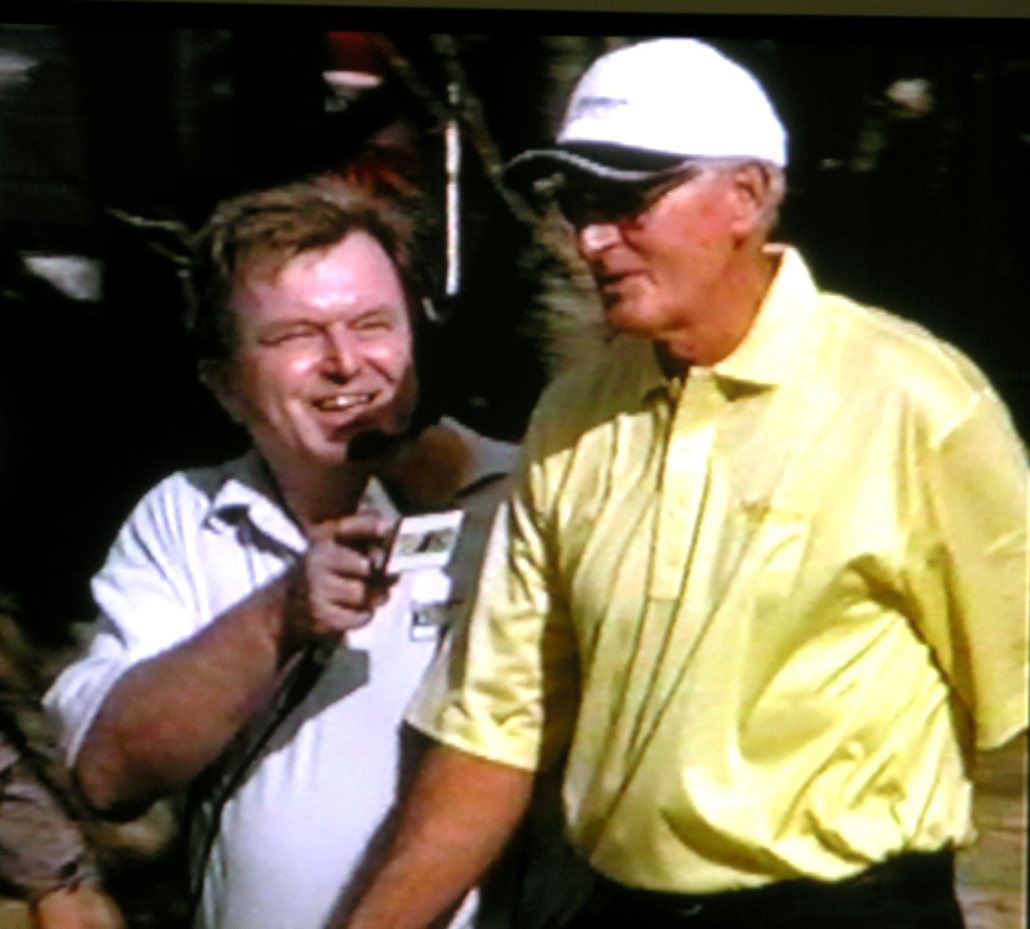
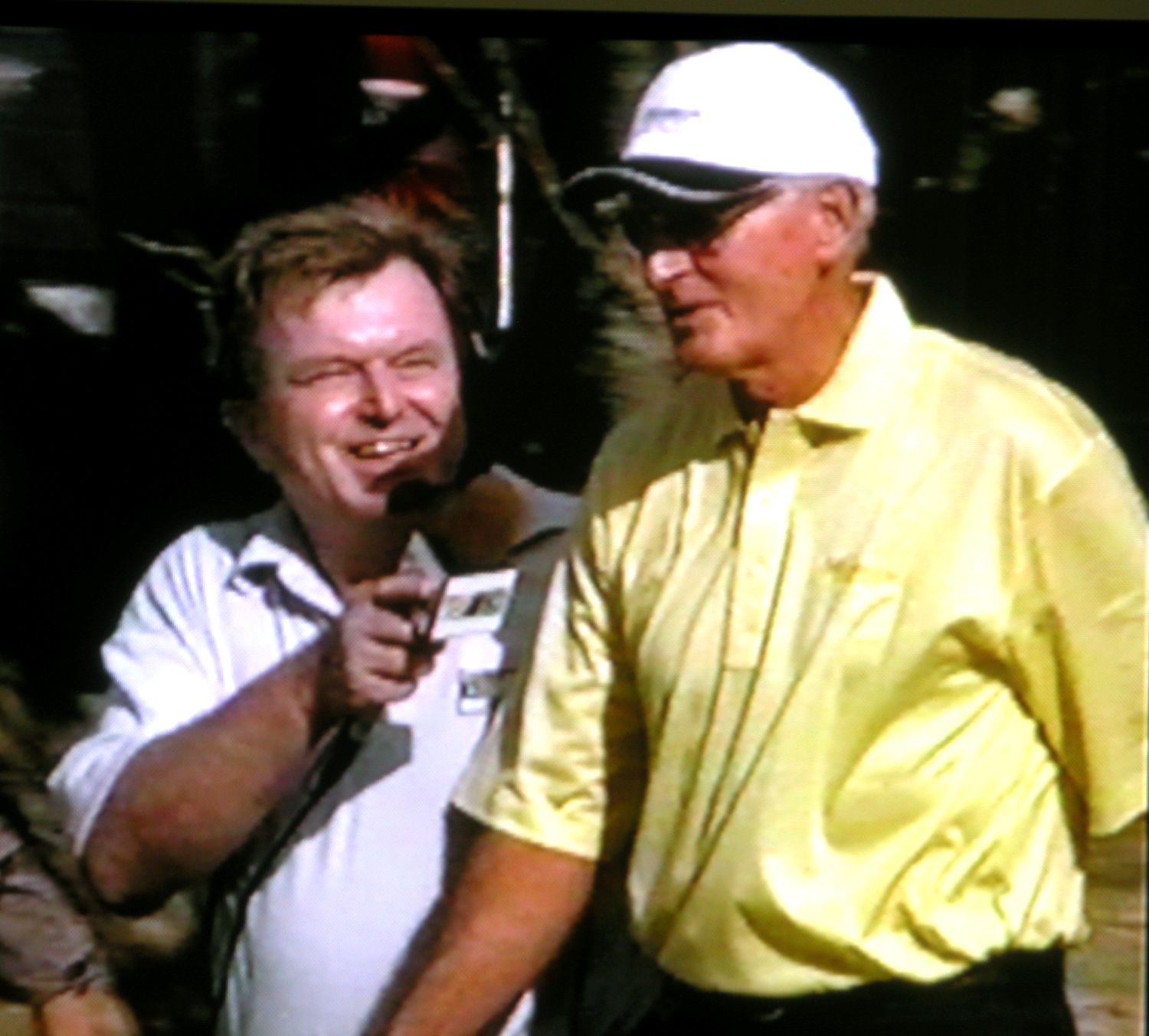
Sir Bob Charles and I – a walk and talk chat for TV as he plays his supposedly last NZ Open in 2004
With the 2026 New Zealand Open fast approaching, my involvement in a commentary role again rekindles some lovely memories of an event which I first attended in 1971 as an 18-year-old, beginning a long association, in various capacities, with one of the world’s oldest national golf Open Championships.
Having caddied in 13, commentated in 17, and attended another five in my capacity as a golf journalist, I have enjoyed many special moments in New Zealand’s golfing flagship, and, in this article, I reflect on some of the moments which have stood out to me over the years.
My first involvement at a New Zealand Open was in 1971 at the Otago Golf Club in Dunedin. It was the first of two significant golf events in Dunedin that year, as, the following week, the second Otago Charity Classic was played at the St Clair Golf Club on the other side of the city.
I caddied for John Lister in both events, but the greatest memory of that week was Peter Thomson winning his 9th and final New Zealand Open title. Thomson is the most prolific winner of New Zealand Open titles, followed by Kel Nagle’s 7. While I cannot recall much about Thomson’s performance that week, it is nice to know that my first exposure to the event was such a milestone in New Zealand golf.
In 1973, my good friend Michael Glading and I were travelling together on the New Zealand circuit, Michael caddying for Bob Charles and myself for John Lister.
The win by Bob Charles in the event at the Manawatu Golf Club in Palmerston North that year was a great thrill for us boys who were having fun on the road, and given it was the first occasion Michael had caddied for the winner of any event, let alone the New Zealand Open, it was a great thrill for the son of a two-time New Zealand Open winner (Bob)
It was Charles’ fourth and final New Zealand Open victory, but his impact on the event and New Zealand golf generally continues to this day.
I was never able to add to my collection of caddy wins at the New Zealand Open but, in 1979, John Lister decided to give the New Zealand Open at the St Clair Golf Club a miss due to an ongoing battle with New Zealand Open tournament organisers so I grabbed the bag of Simon Owen who I had caddied for several years earlier in Europe, including when he defeated Peter Oosterhuis in a playoff to win the German Open in 1974.
Simon led into the final round and was still ahead as he played the short par 4 6th hole, but a clubbing mistake on both our parts saw his approach soar over the green, leading to a double bogey and an eventual three-shot loss to Australian Stewart Ginn. It was a gutting mistake, and although Simon had won the event at Heretaunga Golf Club in 1976, it was the one that got away for me.
1983 was my last involvement as a caddy at the New Zealand Open, that event won by Ian Baker-Finch, but it would be the last time I partnered with the prolific winner of events in New Zealand, John Lister.
I attended the New Zealand Open at Russley Golf Club in Christchurch in 1985 as a spectator, witnessing the second of two wins by the fabulous American golfer Corey Pavin who had also won the previous year at Paraparaumu, but it would be another 11 years before I got the chance to again walk the fairways of a New Zealand Open and this time it was in the role as the on course commentator for TVNZ’s coverage of the event won by Australian Peter O’Malley.
By then, I was living in Australia, but the opportunity came to be involved in the coverage, and I jumped at it. Interestingly, it was the second of two New Zealand Opens played in 1995, Lucas Parsons winning the one held earlier in the year.
A special moment for me was doing a ‘walk and talk’ with O’Malley as he played the final hole at the Grange Golf Club in Auckland, such was his significant lead as he strolled to victory. He won by three over American Scott Hoch, but O’Malley possessed such a laid-back attitude that he was not bothered by the request from the pesky on-course commentator.
In 1998, I was again involved as the on-course commentator at the Formosa Golf Club near Beachlands in Auckland and witnessed one of the most emotional speeches I have ever seen when Matthew Lane struggled through his acceptance speech after an impressive three-shot victory over Australian Rod Pampling, who had the services of Steve Williams on his bag, just a few months before Williams joined forces with Tiger Woods.
It was an emotional but very special moment for Lane and those who witnessed such a gutsy win by a golfer who had struggled for most of his career to play at the level his most significant win showed he was capable of doing.
Two years later, I was again asked to be part of the commentary team, this time at Paraparaumu Beach, when Michael Campbell defeated his fellow New Zealander Craig Perks in a playoff to win his own national open.
Most golfers will tell you that to win their own national open is second only to winning a major, and for Campbell to have done so in front of friends and family so close to his hometown of Titahi Bay made the achievement even more memorable.
It would be Campbell’s only win in the event, although he did finish runner-up in three of the next six years.
Dunedin’s Mahal Pearce became the last New Zealander to win the New Zealand Open for the next 14 years when he was successful at the Middlemore Golf Club in Auckland (now Royal Auckland) in 2003, and it was again yet another thrill in my role as the on-course commentator to see a New Zealander win again.
In 2004, the New Zealand Open at the Grange in Auckland was to have been the last appearance of Sir Bob Charles in the event. He had organised two of his companions from the PGA Tour Champions (Dave Stockton and Jay Sigel) to play the event as part of a swansong to New Zealand’s greatest golfing ambassador.
On the Friday it was becoming clear that Charles would miss the cut and I alerted the producer that as things were getting close to 6.00 pm, and aware of the obsession by commercial networks to take the 6.00 PM News ahead of anything, that we should try and get a chat with Sir Bob as he played what was to be his final hole in an event that in many ways symbolised his contribution to NZ sport as he would not be around for the weekend.
Sir Bob and I walked from his tee shot to the final green, and, after I had asked him the first question, he outlined his thoughts on the occasion. It was to me a very special moment, although three years on, (see later) he would again play the New Zealand Open following his steadfast support of the event and its move to The Hills Golf Club near Arrowtown.
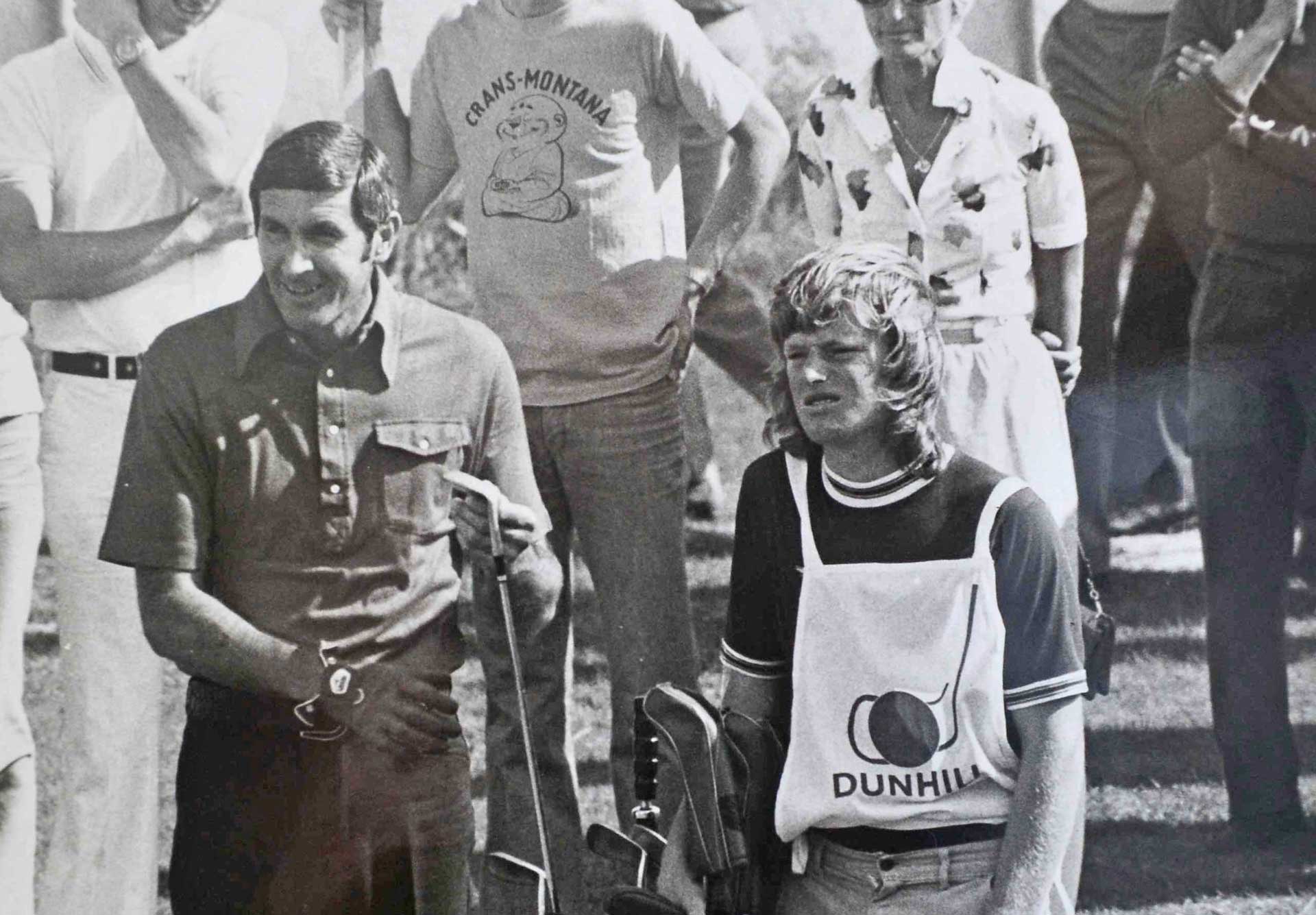
30 years earlier than the 2004 New Zealand Open, I had caddied for Sir Bob when winning the 1974 Swiss Open. The chance to chat with him on air as he made what was to be his final NZ Open appearance was, therefore, very special to me. Three years later, he produced a stunning performance at the 2007 version.
The New Zealand Open was sanctioned with the European Tour over the next three years, two of those at Gulf Harbour in Auckland and in 2006, Australian Nathan Green put together a stunning final round of 67 in some of the most demanding playing conditions to win by two after starting nearly three hours ahead of the final group.
I was, by then, commentating for the European Tour and joined the legendary Renton Laidlaw to broadcast what is known as the world feed, which was an alternate to the local commentary. Having gotten to know Nathan through some work I was doing for his website, I located him after his round and asked if he could join us for 15 minutes in the commentary box as we watched those behind him on the golf course battle the increasingly difficult conditions.
Nathan stayed for around 45 minutes, and despite having been initially heading for the airport, so far off the lead was he when his round finished, it became apparent that he might be involved in a playoff or, even better, a win. He did win by two over a group of six players, including Michael Campbell.
In late 2007, the New Zealand Open moved south to the Hills Golf Club near Arrowtown, where perhaps one of the greatest feats in the history of the event was produced when Sir Bob Charles, at the age of 71, became the oldest player to make the cut on any recognised tour, surpassing the legendary Sam Snead in doing so.
Charles twice broke his age that week, but his contribution to the event was not only his deeds on the golf course, as his advocacy had played a significant role in bringing the event to the Wakatipu Basin and establishing the base for what was to come several years later.
The New Zealand Open left the Arrowtown area for Christchurch after three years, but would return in 2014 when the event adopted its current pro-am format, which has played such a great role in its growth into one of the flagship events on the PGA Tour of Australasia.
Since 2014, there have been several notable editions, including in 2017 when Mike Hendry became the first New Zealander since Mahal Pearce’s win in 2003 to take the title after a playoff with Ben Campbell and Brad Kennedy.
Undoubtedly, the feel-good moment, however, would come in 2025 when West Australian Ryan Peake overcame a chequered history, which had included five years in jail, to win his first PGA Tour of Australasia event.
In doing so, Peake leapt into the top three of the PGA Tour of Australasia Order of Merit and, as a consequence, would end the 2024/2025 season with one of the sought-after DP World Tour cards for the 2026 DP World Tour, and a start at the 2025 Open Championship, which came with the victory.
In that event, Peake got to play with one of his childhood heroes, and fellow left-hander, Phil Mickelson, in the opening two rounds at Royal Portrush, further highlighting the benefits his win at Millbrook Resort had yielded.
Despite the significance of the day and a congested leaderboard, Peake remained stoic as he navigated the final round, helped and calmed to a large degree by his newly recruited caddy for the week, Matthew Fitzsimons, constantly keeping a lid on things.
Peake’s reaction to a holed ten-footer at the last for par and the one-shot victory, however, told the story of just what it meant to him. While his victory speech might not have been as emotional as that of Matthew Lane’s 27 years earlier, it was clear just what a life-changing day it had been.
Just what this year’s New Zealand Open might bring is for the future, but there is little doubting that the event has produced some of the more dramatic moments in not only New Zealand golf but New Zealand sport, and I feel blessed to have been a witness to so many of them.
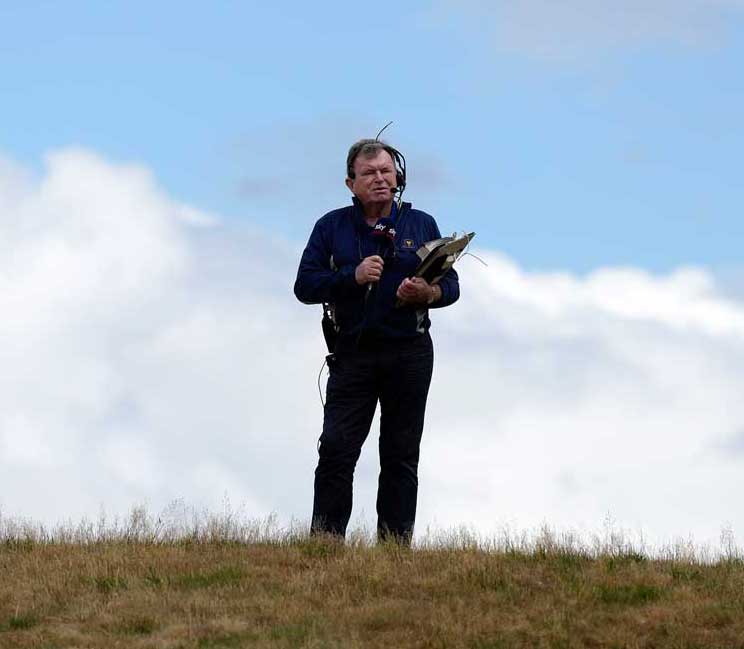
Keeping an eye on the action at the 2023 New Zealand Open

